The 0.7 Pivot: How Thiago Decoded the Nursing Registration Barrier in Rio
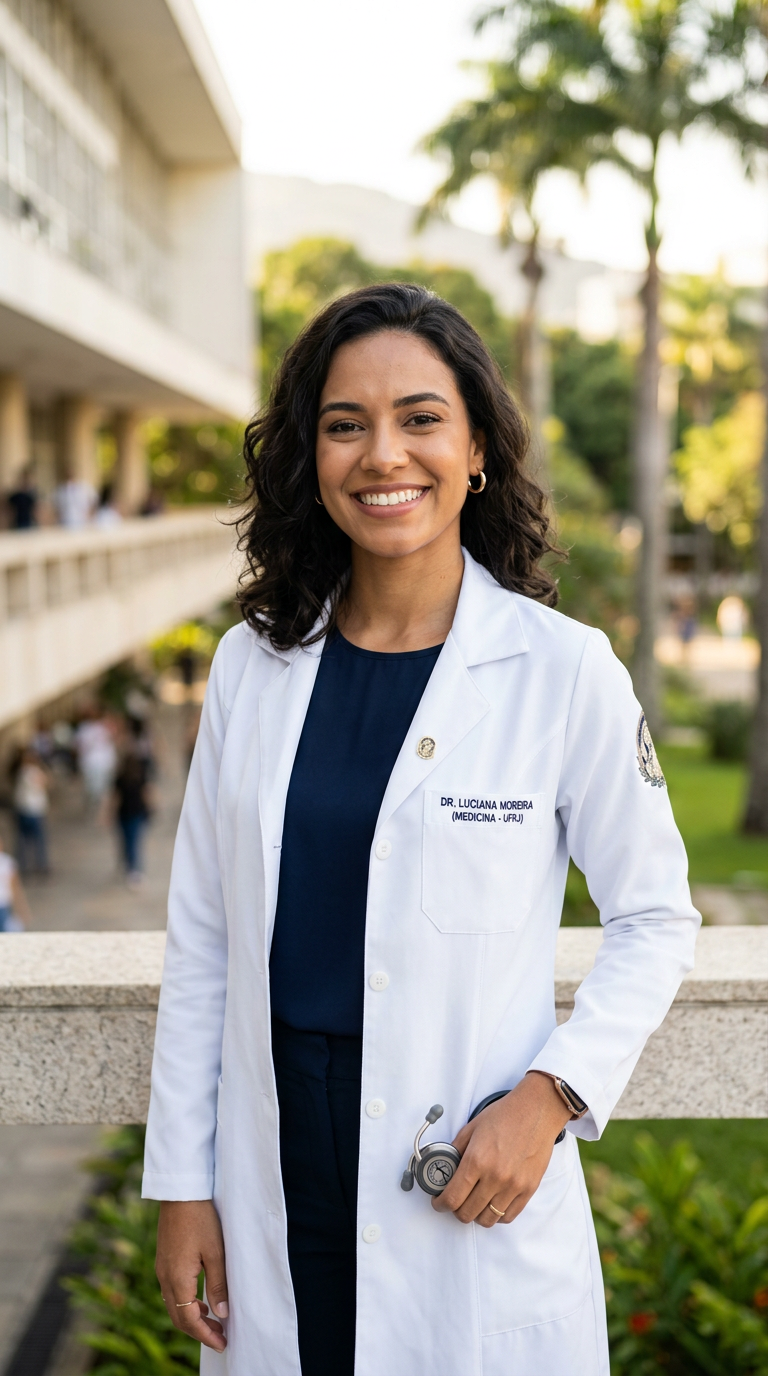
Dr. Luciana Moreira
Rio de Janeiro, Brazil
For 34-year-old Thiago Santos, a dedicated emergency room nurse in Rio de Janeiro, the dream wasn't just about a change of scenery. It was about professional dignity. Despite a decade of experience in high-pressure trauma wards, Thiago’s career was geographically locked. To register as a nurse in the United Kingdom or Australia, he faced the formidable gateway of the [International English Language Testing System](https://en.wikipedia.org/wiki/International_English_Language_Testing_System).
Research from the [ETS Research Institute](https://www.ets.org/research) suggests that adult learners often face unique cognitive barriers when pivoting from specialized technical vocabulary to the functional linguistics required by high-stakes exams. For Thiago, this was painfully true. His first attempt resulted in a Band 4.6. He had spent months with a private tutor twice a week, focusing on generic grammar, but his scores remained stagnant. He was trapped in what linguists call a 'plateau of fossilized errors.'
The Anatomy of a Stall
Thiago’s struggle wasn't a lack of effort. It was a lack of granular data. In his first exam, his Speaking score plummeted because of 'hesitation related to content searching' and 'limited grammatical range.' According to the [official IELTS band descriptors](https://www.ielts.org/for-researchers/band-descriptors), a candidate at Band 4 often struggles with anything beyond basic sentence structures.
"I felt like a failure," Thiago recalled. "I could save a life in the ER, but I couldn't explain a simple graph in English." His Writing Task 1 was a mess of circular logic, and his Reading scores suffered because he couldn't master the 'skimming and scanning' techniques recommended by [IELTS Liz](https://ieltsliz.com). He needed more than a tutor; he needed a diagnostic mirror.
The Digital Catalyst
Thiago discovered our platform late one night after a grueling shift. Unlike traditional methods, the AI Roadmap didn't start with a textbook; it started with a 12-point Sub-skill Analysis. It identified that while his vocabulary was sufficient, his 'Coherence and Cohesion' in writing was failing. The platform’s Growth Engine immediately shifted his focus toward daily micro-tasks that targeted these specific gaps.
One of the most startling statistics in language acquisition is the [impact of immediate feedback loops](https://scholar.google.com/scholar?q=impact+of+immediate+feedback+on+L2+acquisition), which can accelerate learning by up to 300% compared to delayed weekly tutoring. Thiago’s Band Prediction tool became his pulse monitor. Each morning at 6:00 AM, before the Rio humidity became unbearable, he checked his predicted score. It sat at a discouraging 4.7. But then, it began to move.
A Disciplined Routine
Thiago’s schedule was a masterpiece of time management:
- 06:30 AM: 15 minutes of Reading Pro on the 'Metrô Rio', focusing on identifying synonyms in text—a skill crucial for the [British Council's reading modules](https://takeielts.britishcouncil.org/teach-ielts/resources).
- Lunch Break: A 20-minute session with the AI Speaking Examiner. Thiago practiced describing medical procedures, using the Cue Card Practice feature to develop 2-minute sustained responses.
- 08:00 PM: Engaging with the Growth Engine’s daily logic puzzles to improve his Writing Task 2 structure.
He stopped memorizing word lists and started focusing on 'collocations'—words that naturally transition together. As noted on [IELTS-Simon](https://ielts-simon.com), the secret to moving past Band 5 language is the ability to use 'less common lexical items' with some awareness of style and collocation.
The Breakthrough
The turning point came during a Writing Pro session. The AI flagged that he was consistently using 'but' and 'and' instead of sophisticated connectors like 'nevertheless' or 'consequently.' The sub-skill analysis showed his 'Grammatical Range' jumping from a 4.0 to a 5.5 within just 22 days of targeted practice.
By his third month, the Band Prediction hit 5.3. Unlike his previous attempt where he felt blind, Thiago now had a data-backed confidence. He understood the 'signposting' techniques taught by [IELTS Advantage](https://www.ieltsadvantage.com), which helped him navigate the Listening section's distracting information.
Result Day in Rio
When the email arrived, Thiago was back in the breakroom at the hospital. He didn't open it immediately. He waited until he was home, overlooking the lights of the North Zone. He scrolled down: Overall Band 5.3. Specifically, his Speaking had climbed from a 4.5 to a 6.0, an incredible leap for a 3-month window.
This wasn't just a number; it was his ticket to the Nursing and Midwifery Council (NMC) registration process. The 0.7 increase represented a fundamental shift in how his brain processed English—from a foreign obstacle to a professional tool.
> "The private tutor was teaching me English, but the AI platform taught me how to beat the IELTS. Seeing my sub-skill scores change in real-time gave me the same adrenaline as a successful resuscitation. For the first time, the exam felt predictable."
What’s Next?
Today, Thiago is preparing his visa documents for a hospital in Manchester. He no longer fears the language barrier. By leveraging AI to identify his 'semantic shadows' and using focused practice roadmaps, he proved that at age 34, professional relocation isn't a dream—it's a data-driven reality. He is currently using the platform to bridge the gap toward a Band 6.5 for his long-term residency goals, proving that the journey of a thousand miles begins with a single, AI-tracked step.
Names and stories are representative of typical user experiences on the platform.